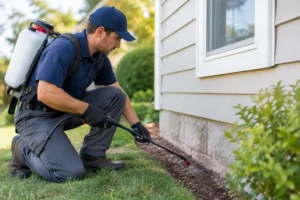
A termite problem rarely announces itself with a dramatic moment. More often, Wichita homeowners find a soft spot near a baseboard, a mud tube along the foundation, or a swarm of winged insects near a window. When that happens, Termidor termite treatment Wichita property owners rely on can provide a direct, proven way to target the colony – not just the termites that happen to be visible.
At Go Green Pest Control, termite work starts with a careful inspection and a plan built around the structure, the evidence found, and the conditions around the property. Termites can cause expensive hidden damage, but quick action and the right treatment can protect what you have worked hard to own.
Why Termites Are a Serious Wichita Property Risk
Subterranean termites are the primary concern for homes and businesses in this area. They live in the soil and need moisture to survive, which is why they often enter buildings from below. Cracks around utility lines, expansion joints, porches, garages, and foundation walls can all create access points.
The troubling part is that termites eat wood from the inside out. A wall, trim board, floor joist, or sill plate may look fine on the surface while activity continues behind it. By the time a homeowner notices blistered paint, hollow-sounding wood, sagging material, or mud tubes, the colony may have been feeding for some time.
Termites do not necessarily mean a property has been neglected. They can find well-maintained homes, new construction, rental properties, offices, and apartment buildings. Wichita weather can also create the conditions they prefer. Periods of spring rain, drainage issues, mulch held too close to a foundation, and plumbing leaks can all add moisture near the structure.
What Makes Termidor Different?
Termidor is a professional termite treatment designed to create a treated zone where termites travel between the soil and a structure. It is non-repellent, meaning termites generally do not detect it and avoid it the way they may avoid a repellent barrier. That matters because avoiding a treatment area can sometimes leave a colony with alternate paths into the building.
As termites move through a properly treated area, they can transfer the product through normal colony activity. This approach is intended to affect termites beyond the ones that initially contact the treatment zone. The goal is not to spray visible insects and hope for the best. The goal is to stop the active termite connection and eliminate the colony pressure around the home or building.
Go Green Pest Control uses Termidor-only termite treatment because the product has a strong record for subterranean termite control when it is applied correctly. Treatment quality depends on much more than the product name, though. Thorough inspection, accurate trenching or drilling where needed, correct application, and clear follow-up all matter.
A Termidor Termite Treatment Wichita Inspection Should Come First
No two structures are exactly alike. A slab foundation, crawlspace, finished basement, attached garage, deck, patio, and landscaping layout can all affect how termites reach the building. That is why an inspection should come before anyone recommends a price or treatment plan.
During a termite inspection, a trained technician looks for active mud tubes, damaged wood, conducive moisture conditions, accessible foundation areas, and signs of previous treatment. They may inspect crawlspaces, utility areas, exterior walls, garages, porches, and other vulnerable locations. If a real estate transaction is involved, the inspection may also support a WDO report where appropriate.
The findings determine the scope of treatment. Some properties need a straightforward exterior soil treatment. Others require drilling through concrete along a garage edge, patio, porch, or interior slab so the soil beneath can be reached. A property with a crawlspace may require attention to specific foundation walls or areas where wood and soil conditions create a higher risk.
A reputable provider should explain what they found, where treatment is recommended, and why. You should not be left guessing whether an application addressed the actual entry points.
What Treatment Day Typically Looks Like
Termite treatment is not a one-size-fits-all spray around the outside of a house. A technician may trench narrow areas of soil next to the foundation, apply the treatment at the appropriate depth, and replace the soil afterward. Where concrete prevents access to the soil, small drilled access points may be necessary. Those openings are patched after treatment.
The work is focused and deliberate. Technicians should protect the treatment area, follow product-label directions, and discuss any preparation or access needs before they arrive. If you have children, pets, employees, patients, or customers on-site, share that information during scheduling. A professional can explain practical precautions for your specific property and when treated areas can be used normally.
For many homeowners, the biggest concern is disruption. In most cases, termite treatment can be completed without turning a home upside down. The exact process depends on the foundation type, accessibility, and whether interior treatment points are needed. Commercial properties may need scheduling that works around operating hours, resident access, food-service procedures, or healthcare safety requirements.
Safety Means Targeted Treatment, Not Guesswork
Families and pet owners should never have to choose between a termite-free home and responsible pest management. Termidor is a professional-use product, and it must be applied according to its label by trained professionals. More product is not better. Proper placement and careful handling are what make a treatment effective and responsible.
That safety-first approach also includes identifying conditions that can keep inviting termites back. Correcting drainage problems, repairing leaks, moving wood debris away from the foundation, and avoiding direct wood-to-soil contact can reduce future risk. These steps do not replace a professional treatment for an active infestation, but they support long-term protection.
Be cautious about DIY termite sprays, bait stakes used without a full inspection, or surface applications sold as complete termite solutions. A product may kill insects it touches while doing little to address the hidden colony or the soil-to-structure pathway. Saving money upfront can become costly if activity continues unnoticed.
When to Call for a Termite Inspection
You do not need to wait for major damage to request help. Call when you see pencil-width mud tubes on masonry or wood, flying termites indoors, discarded wings near windows, soft or hollow wood, unexplained bubbling paint, or moisture-damaged areas near a foundation. Swarmers can be confused with flying ants, so professional identification is useful before assuming the worst.
Property managers and commercial decision-makers should also act quickly when maintenance teams report suspicious tubes, damaged baseboards, recurring moisture, or wood deterioration. In apartments, healthcare facilities, warehouses, and public-facing businesses, a fast inspection can help prevent a localized issue from becoming a larger repair and occupancy problem.
It also makes sense to schedule an inspection before buying a property, after discovering moisture issues, or when a home has a history of termite activity. Termites are not a pest to monitor casually for a few months. Early inspection gives you facts, options, and a better chance to limit repair costs.
What to Expect From a Local Termite Professional
A good termite company should provide more than a quick quote. Look for a provider that explains the treatment plan in plain language, takes the time to inspect the accessible structure, and answers direct questions about preparation, treatment locations, safety precautions, and follow-up.
Price matters, but the lowest estimate is not always the best value if the scope is vague or key areas are skipped. Ask what areas will be treated, whether drilling is included if needed, what documentation you will receive, and how the company handles concerns after service. For a problem with the potential to affect a building’s structure, clarity is part of the service.
If you suspect termites in your Wichita home or business, a free inspection is the right next step. The sooner you know whether the signs point to active termites, old evidence, or another pest entirely, the sooner you can make a confident decision and protect your property.