A bed bug treatment can only reach the bugs that stay exposed to it. That is why the right bed bug treatment preparation steps are not busywork – they are a major part of getting control of an infestation. Careful preparation gives bed bugs fewer places to hide, prevents them from hitching rides into clean rooms, and helps your technician treat the areas that matter most.
If you are in Wichita, Manhattan, Junction City, or a nearby Kansas community, take a breath and follow the instructions for your specific service. Bed bugs are stressful, but they are treatable. A methodical plan protects your household, pets, and belongings while giving the treatment its best chance to work the first time.
Start With Your Treatment Instructions
Preparation is not identical for every bed bug service. A heat treatment, a targeted liquid treatment, and a combined approach can require different room setup, laundry, and re-entry procedures. Your pest professional should provide directions tailored to your home, infestation level, and treatment method.
Read those directions before moving anything. If an instruction is unclear, ask before you start. Well-meaning preparation can sometimes create a bigger problem. For example, carrying unbagged clothing, pillows, or electronics into another room may move bed bugs to an area that was not previously infested.
Keep children and pets out of the work area while you prepare. Do not apply store-bought sprays, bug bombs, rubbing alcohol, essential oils, or powders unless your treatment provider specifically tells you to do so. These products can drive bed bugs deeper into hiding, create safety concerns, and interfere with a professional treatment plan.
Bed Bug Treatment Preparation Steps for Bedrooms
Bedrooms deserve the closest attention because bed bugs prefer to feed near people while they sleep. Start with the bed, then work outward through nearby furniture, flooring, and stored items.
Bag bedding before carrying it away
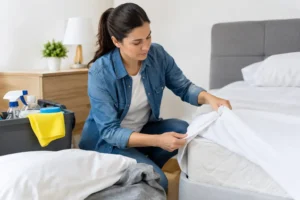
Strip sheets, pillowcases, blankets, mattress pads, comforters, and any washable fabric from the bed. Put each load directly into a sturdy plastic bag and seal it before taking it through the house. This simple step helps prevent bugs or eggs from dropping along the way.
Wash items according to their care labels. When possible, use a dryer on the highest heat the fabric can safely handle. The dryer is often the critical part of the process because sustained heat kills bed bugs and eggs. Once items are fully dried, place them in fresh, sealed bags or clean bins until your provider says it is time to put them back.
Do not set clean laundry on a couch, chair, or bed that may still harbor bed bugs. Clean items need to stay sealed and separated from untreated areas.
Clear access around beds and furniture
Move beds, nightstands, dressers, and other furniture away from walls only if your provider asks you to. Technicians need access to baseboards, bed frames, headboards, seams, cracks, and the floor perimeter. Remove items from under the bed so those hiding spots can be inspected and treated.
Take pictures, lamps, charging cords, books, boxes, and personal items off nightstands and nearby shelves. Place loose belongings in sealed bags or bins as directed. Avoid stacking everything in the middle of the room. Large piles can block treatment access and give bed bugs another place to hide.
If your bed frame or headboard has storage compartments, cracks, or loose hardware, tell the technician. These areas are common hiding places. Do not throw out the bed or furniture unless advised to do so. Replacing a bed before the infestation is controlled can be expensive and may spread bugs to the new item.
Handle clothing and closets with care
Clothing near the bed should be treated as potentially exposed. Bag items before moving them, then wash and dry what can be laundered. Dry-clean-only items, shoes, handbags, and delicate belongings need a different plan. Set them aside in sealed bags and ask your provider how to handle them safely.
For closet contents, do not automatically empty everything into another room. Your instructions may call for laundering certain items, bagging them, or leaving hanging clothes in place. It depends on the treatment method and where bed bug activity has been found.
Prepare Living Areas Without Spreading Bed Bugs
Bed bugs can live beyond the bedroom, especially when an infestation has been present for a while. Upholstered chairs, recliners, sofas, luggage, curtain hems, and clutter near where people rest can all require attention.
Pick up loose items from floors and furniture, but keep each room’s belongings in that room whenever possible. Use clear bags or labeled bins so you know what came from where. A label such as “bedroom – dried clean clothes” or “living room – needs inspection” prevents mix-ups later.
Vacuuming can help remove visible bugs, shed skins, and debris from mattress seams, bed frames, upholstered furniture, carpet edges, and baseboards. Use a crevice tool slowly and deliberately. When you finish, immediately seal and dispose of the vacuum contents in an outdoor trash container. If your vacuum has a reusable canister, empty it into a bag outside, seal the bag, and clean the canister according to your provider’s directions.
Avoid donating, selling, or moving furniture from the home during treatment. A curbside couch or mattress can spread bed bugs to another family. If an item must be discarded, follow local disposal requirements and clearly mark it as infested when appropriate.
Protect Food, Medications, Pets, and Sensitive Items
A safety-first treatment plan accounts for the people and animals who use the space. Store food, dishes, baby items, pet bowls, pet food, medications, and toothbrushes as instructed before service. Often, sealed cabinets are acceptable, but your provider’s directions control because treatment methods differ.
Fish tanks require special attention. Let the technician know before the appointment so you can receive specific instructions for covering or protecting the tank and addressing air pumps. Birds, reptiles, small mammals, and household pets should be removed from treatment areas for the required period. Plan ahead for where everyone will stay if the service requires you to leave the home.
Electronics are another common concern. Bed bugs may hide around alarm clocks, gaming systems, power strips, and bedside devices, but moisture and heat can damage them. Do not spray electronics or put them in a dryer. Leave them unplugged and accessible unless your technician gives different instructions.
What Not to Do Before Bed Bug Treatment
The urge to clean every corner is understandable. Still, a few actions can make treatment less effective or spread the infestation.
Do not sleep in another room unless your provider directs you to. Bed bugs follow their food source. Suddenly moving to the couch or guest room may encourage them to spread into new areas.
Do not remove items from the home without sealing them first. Do not use foggers or total-release aerosols. Do not apply pesticides from the hardware store on top of a scheduled professional service. And do not assume a lack of bites means the problem is gone. Some people do not react to bites, and bed bugs can remain hidden for long periods.
For Rentals, Apartments, and Commercial Properties
In apartments, duplexes, dorms, assisted living communities, and hotels, fast communication matters. Bed bugs can travel through shared walls, utility openings, hallways, and resident belongings. Property managers should give occupants clear preparation directions, schedule access to affected units, and coordinate inspections of adjacent spaces when recommended.
For workplaces and healthcare-related facilities, preparation should protect privacy and business continuity. Designate a point person, limit unnecessary movement of potentially affected furniture or textiles, and follow the treatment provider’s site-specific instructions. A targeted response is usually more useful than an organization-wide panic.
Plan for the Days After Service
Treatment day is not always the finish line. Your technician may schedule an inspection, follow-up treatment, or monitoring visit because bed bug eggs and hidden insects can make a single visit insufficient. Keep follow-up appointments, report any live activity you see, and continue to keep cleaned textiles sealed until advised otherwise.
After treatment, avoid deep-cleaning treated cracks, baseboards, bed frames, or other designated areas until your provider says it is safe to do so. Cleaning too soon can remove material needed to control newly emerging bed bugs. You can still maintain normal sanitation in untreated areas and follow any re-entry guidance you receive.
A guarantee is most meaningful when the preparation and follow-up are handled correctly. Go Green Pest Control can help Kansas homes and properties build a clear plan around proven treatment, family-conscious practices, and the next steps needed to keep bed bugs from reclaiming the space.
The best next move is a calm one: keep belongings contained, follow the instructions made for your property, and let the treatment reach the places bed bugs count on for cover.